

Fast & Furious Five Kinox To
If you're looking to reduce your carbon footprint, prefer a greener lifestyle, or brand one small change that has a positive touch on, your closet is an easy place to make eco-friendly shopping choices.

Let's exist honest, fast fashion offers a quick thrill: cheap clothes that allow u.s.a. to quickly refresh our wardrobes and follow the latest trends. However, these same fast-manner brands have a lot of skeletons in their closets. You know how when something seems as well good to be true it usually is? In this case, those low prices are made possible past shortcuts that harm the environment and the people who brand the clothes.
While much of the responsibility rests on the shoulders of brands, consumer habits are important too, says Reimer Ivang, founder of Better Earth Style, a Danish sustainable fashion brand. Consumers tin stand up up to the hazards of fast style's environmental bear on by learning to spot fast-fashion brands and opting instead to back up sustainable habiliment brands that utilize manufacturing processes and materials that are more than ethical and amend for the Earth. And it isn't only about what you buy, it'southward also about what yous do with the clothing when you're finished with it. You tin can benefit past recycling or upcycling clothes instead of tossing them out.
Before nosotros share tips on how to shop for more sustainable wear, nosotros're going to look at just how fast fashion became so bad in the first place.
Exactly what is fast manner?
That $x dress or $5 T-shirt y'all run into hanging on a store rack—chances are, that's fast mode. The shop that restyles its mannequins in new clothes weekly, or a website that updates its offerings daily, that'south fast fashion too. Basically, cheap trendy wearable is fast fashion. The term refers to a business organization model where manufacturers set a system to quickly reproduce the latest styles seen on celebrities and runways to sell them to customers for a fraction of the cost of designer lines. Collections like these are produced on a mass calibration that encourage a pattern of shopping and discarding items for new outfits at a rapid step.
The standard runway business model sees designers creating four to six collections in a year. But fast-fashion retailers can produce 12 to xiv collections in that same time frame!
How did fast manner happen?
As recently as the plow of the 20th century, the majority of clothing was tailored to your body, either in a specialty shop or made at home by hand. Garments could take weeks to be made. This all began to modify as the assembly lines and factories that were the hallmark of the Industrial Revolution slowly became a mainstay of clothing production—and information technology has stayed that mode e'er since.
Beginning in the 1960s—when the average American bought fewer than 25 items of clothing per twelvemonth—fashion began turning over more quickly, and the manufacturing procedure evolved along with it to keep up with always-irresolute tastes. Since and so, the pace has merely quickened: By some estimates, Americans bought an boilerplate of 68 items of clothing per year in 2018. On average, each slice is worn just 7 times before beingness cast bated, according to i study. Where does all that unused clothing go? To the landfill, to the melody of 10.5 one thousand thousand tons of textiles (the majority of information technology habiliment) in 2015, co-ordinate to the Ecology Protection Bureau.
Examples of fast-fashion brands
Ane of the pioneers of fast fashion is the well-known Spanish brand Zara. Founded in 1975, the retailer made its name making less expensive versions of high-end clothing. This model has been copied by numerous other retailers, including H&M, Shein, Boohoo, Uniqlo, Topshop, Primark, Mango, and more than.
How to spot fast-fashion brands
Cheap fashion is fabricated with inexpensive labor and cheap materials. A few telltale signs to exist on the picket for include:
- Low cost. One of the easiest ways to spot a fast-way brand is to look at the prices. If they're too expert to exist true, they probably are.
- Constructed fabrics. While some quality items are made with polyester, rayon, and nylon, fast fashion typically uses these more than than natural fabrics such as cotton and silk.
- Poorly done finishing touches. Bank check seams and buttons. With fast manner, seams may give abroad readily and buttons may be loose.
- Rotating inventory. Brands that update their stock weekly or bi-weekly are following the fast-fashion model to proceed consumers buying, discarding, and ownership more than.
Problems with fast fashion
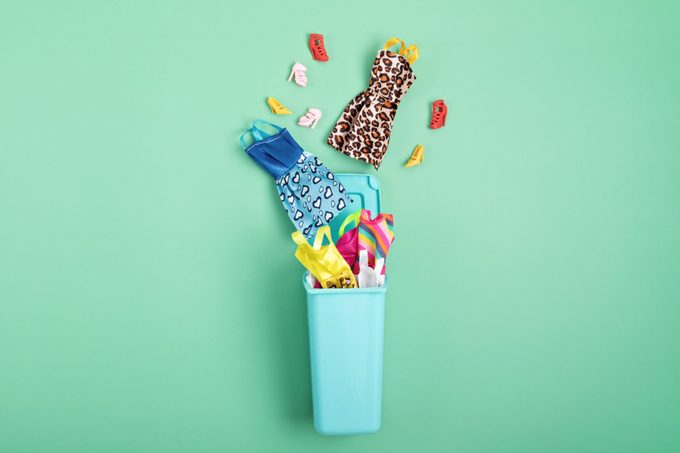
Getting all those new items of clothing into the hands of consumers means that corners are cutting when it comes to designing, producing, and aircraft.
Environmental touch
I of the cheapest and most popular fabrics is polyester; unfortunately, it comes with a wardrobe-full of issues. For one, it takes nearly 432 meg barrels of oil yearly to make constructed textiles. This reliance on fossil fuels produces greenhouse gas emissions that are linked to climatic change. These plastic-based fabrics also pose a threat of shedding microplastics—tiny pieces of plastic that are 8 mm in length—in the washing motorcar that are and then washed into our oceans, where they pollute the oceans and other waterways.
Fifty-fifty natural fabrics are problematic when used by fast-fashion retailers. In 2019 alone, conventional cotton crops grown in the U.S. required 68 million pounds of pesticides. These chemicals don't just sit on cotton wool crops, they contaminate soil from runoff water and pose a gamble of water and soil contamination for local communities.
Fast fashion doesn't get much better when it comes to the adjacent phase in the design process—achieving all those beautiful colors. It takes upward to 200 tons of water to produce a ton of dyed clothing. Worse still, the conventional dyes used are a mixture of chemicals that don't break down properly every bit they enter rivers and oceans. Over the years, these chemicals accumulate in the environment, and in some instances, waterways close to factories where runoff h2o from the dyeing process enters take go too hazardous to utilize. Ane example: In Mainland china, a global capital of the article of clothing manufacturing manufacture, more than 70 pct of the rivers are contaminated and accounted unsafe for man use. You can do your part to conserve h2o at home.
The man cost
Cheap habiliment is made by cheap labor: Xxx-five cents per 60 minutes—that's the wage for manufactory workers who produce clothing for some popular retailers.
Sometimes working weather condition are unsafe too. The 2013 blow at the Rana Plaza building in Bangladesh highlighted the cost of fast manner when the building that housed five garment factories collapsed, killing more than 1,000 garment workers. The tragic incident shone a spotlight on the inhumane conditions at the factory, including slave wages, labor rights violations that included 14-hour workdays, physical and verbal corruption, and exposure to toxic chemicals.
Sadly, these bug are still largely unaddressed throughout the way industry, and man rights groups are continuing to fight for workers' rights. One way yous can help is to shop for brands that are Fair Trade Certified.
Impact on animals
Animals are harmed by fast-fashion production in a number of means. The microplastics mentioned above don't just pollute oceans, they are also harmful to marine life. Ocean creatures, from tiny lugworms and shrimp to giant whales, ingest microplastics. While the furnishings of microplastics on sea life are still being studied, inquiry has shown that in smaller ocean animals they tin can block their digestive tracks and lead to starvation.
Then at that place are the threats to their habitats. Rayon and viscose are fabricated of wood pulp. Entire forests in Indonesia, Canada, and the Amazon have been logged to create clothing, destroying beast habitats in the procedure.
Lastly, the nigh direct impact is to the animals raised and often slaughtered for the materials they produce, such as silk and leather. While there are arguments for avoiding all materials that come up from animals, the ones used past fast-mode manufacturers are particularly egregious. For example, some silkworms are boiled alive so that the silk from their cocoons tin be harvested. (Wild silk or peace silk, where the moth leaves its cocoon behind, are considered more humane alternatives.)
Disposable wearable
Most of the wearable created by fast-fashion retailers ultimately ends up in landfills; some estimates suggest that the average American throws abroad 82 pounds of clothing each year. "Because article of clothing is cheap and abundant, we wear each piece less and throw it out at college rates than in the past," says Karla Magruder, founder of Accelerating Circularity, a group that promotes recyclable style. "People in the U.South. throw away approximately 11 to 12 million tons of textiles per year," she says.
And then, what can we do now?

At present that you know what fast fashion is and accept a amend idea how to spot these brands, you tin begin to seek out more sustainable manner choices. At first, you might be tempted to encompass H&M's "conscious" line or Boohoo's latest "sustainable" collection. But, be aware that these usually amount to null better than greenwashing. "Many companies employ the term ["sustainable"] to evidence that they've changed a small pct of faulty business models, but they're far from being a office of the solution," Ivang says.
Instead, a smarter idea is to wait for sustainable brands that have congenital sustainable manufacturing practices into their business model from the start. That can include sourcing natural or organic fabrics (GOTS-certified is the aureate standard) and ensuring that their garment workers are paid a livable wage and take fair working weather condition.
Some other manner to embrace sustainability is to shop less, buy vintage or secondhand, wear items longer, and recycle or upcycle your clothing instead of throwing out old items. Recycling your clothing tin can have the added benefit of creating materials for brands that repurpose existing fabrics instead of relying on new resources, explains Magruder.
What's next for fashion?
There are a lot of changes that demand to happen to brand the industry better for both the environs and the people who make these garments.
A garment's lifecycle—from the raw materials used to the length of time a garment is worn and how its discarded—is key to creating a amend fashion model. "The fashion industry needs to learn how to make fewer, more durable clothes that are made in a mode that allows them to exist readily recycled," Magruder says.
As consumers, we don't take to wait for fast-fashion brands to recycle and create better vesture. We can begin supporting sustainable fashion brands, ownership less overall, and upcycling and recycling our clothing. If you'd similar to learn more than most creative ideas on how to upcycle clothing, read near Bounding main Sole, the Kenyan-based group turning discarded flip-flops into cute artwork.
Sources:
- Reimer Ivang, founder of Better World Fashion
- Scientific Reports: "Plastic microfibre ingestion by abyssal organisms"
- CFDA: "Polyester"
- The Organic Center: "The Ecology Footprint of Organic Cotton"
- PNAS: "Citizen monitoring of waterways decreases pollution in China past supporting authorities action and oversight"
- Fashion Revolution: "The Human Toll of Our Garments"
- Karla Magruder, founder of Accelerating Circularity
Source: https://www.rd.com/article/fast-fashion/
Posted by: carlsonausiout.blogspot.com
0 Response to "Fast & Furious Five Kinox To"
Post a Comment